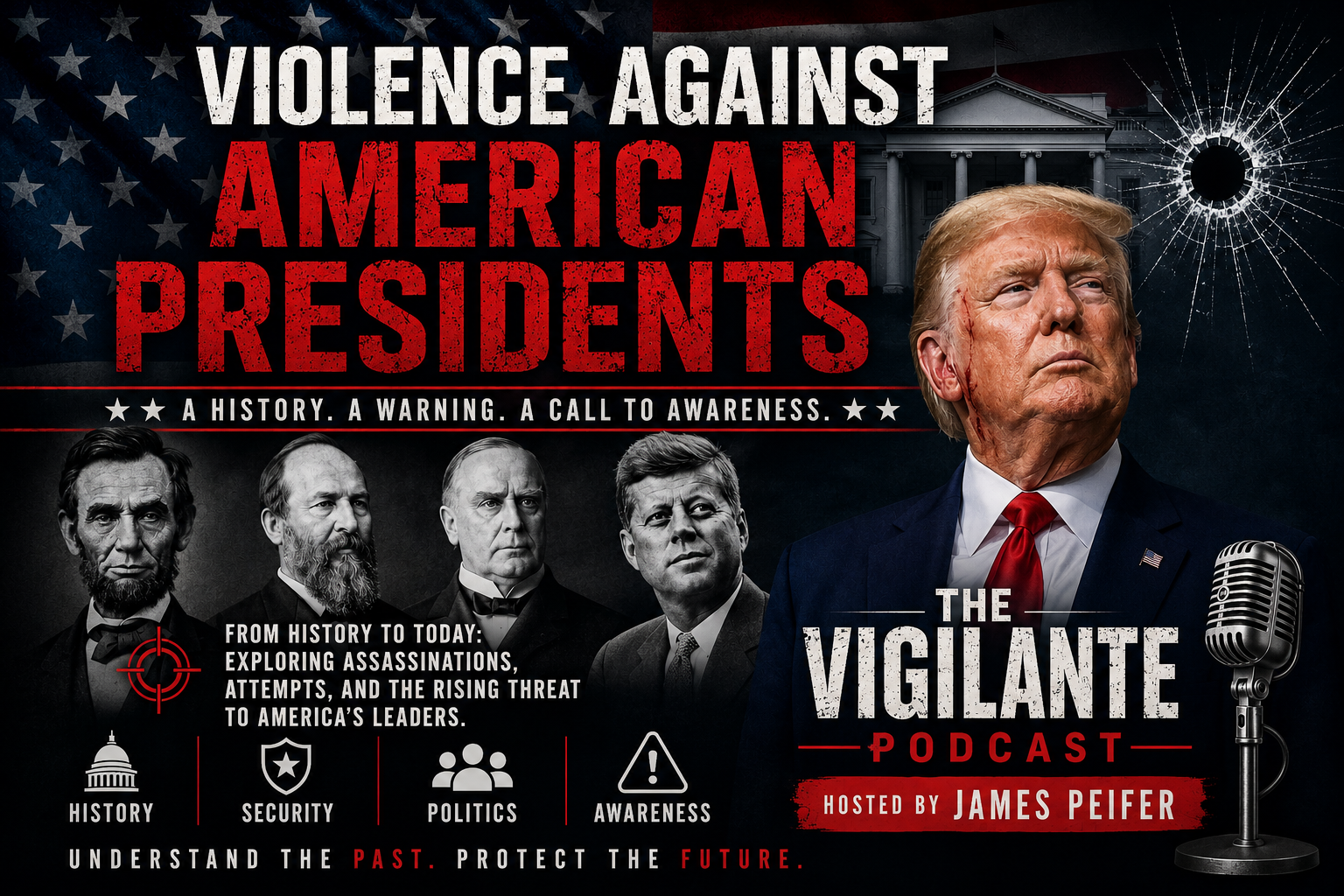
Political violence has been a part of American history, manifesting through assassinations, civil unrest, and terrorist attacks. Events like the assassination of presidents and significant civil rights protests illustrate the long-standing issue.
The historical record of violence against American presidents includes numerous assassination attempts and attacks.
Four United States presidents have been assassinated:
- Republican Abraham Lincoln (1865)
- Republican James A. Garfield (1881)
- Republican William McKinley (1901)
- Democrat John F. Kennedy (1963)
In addition to successful assassinations there have been at least 19 direct attempts on the lives of presidents and presidential candidates, with several incidents resulting in injuries.
Many of the assassination attempts on presidents were motivated by a desire to change the policy of the American government. Not all attacks were politically motivated. Many attackers had questionable mental stability, and a few were found to be legally insane.
___
18 U.S. Code 871 – Threats against President and successors to the Presidency, makes it a federal felony any threat to take the life of, to kidnap, or to inflict bodily harm upon the President of the United States, the President-elect, the Vice President or other officer next in the order of succession to the office of the President of the United States.
___
Ronald Reagan, in 1981, was the only sitting president to have been wounded in an assassination attempt and survive. Theodore Roosevelt, in 1912, was wounded in an assassination attempt as a former president. Donald Trump, in 2024, was wounded in an assassination attempt in between his two terms.
The American public has been made aware of the attempts on the life of President Donald Trump depicted on television news reporting – July 13, 2024, in Butler, Pennsylvania; September 15, 2024, in West Palm Beach, Florida and most recently April 25, 2026, in Washington D.C.
The following is a record of many more attempts on President Trump’s life:
- June 18, 2016 – Michael Steven Sanford, a 20-year-old man and British citizen from Doring, Surrey, attempted to draw an officer’s pistol during a Las Vegas rally to fire at Trump. Sanford was released after 11 months in prison.
- September 6, 2017 – Gregory Lee Leingang, a 42-year-old man from Bismark, North Dakota, attempted to assassinate President Trump in Mandan, North Dakota, while Trump was visiting the state to rally public support. Leingang stole a forklift from an oil refinery and drove toward the presidential motorcade. While interviewed, Leingang, admitted his intent to murder the president by flipping the presidential limousine. He pleaded guilty and was sentenced to 20 years in prison.
- November 2017 – A man affiliated with Islamic State (IS) whose name was not released, was arrested by the Philippine National Police in Rizal Park, Manila, for planning to assassinate Trump during the diplomatic ASEAN Summit. Before the landing of Trump’s airplane, the Secret Service discovered a credible terrorist threat from a man who threatened to kill the president on social media, quickly tracking down and arresting the terrorist. The government disclosed the incident to the public, after a year of silence, in a television documentary.
- October 1, 2018 – An envelope laced with ricin was sent to Trump before being discovered by mailing facilities. Several other letters were sent to the Pentagon, all of them labeled on front with “Jack and the Missile Bean Stock Powder.” Two days later on October 3rd, a 39-year-old Logan, Utah resident and Utah Navy veteran named William Clyde Allen III, was arrested and charged with one count of mailing a threat against the president and five counts on mailing threatening communications to an officer or an employee of the United States. Allen was sentenced, in 2024, to 20 years in prison for his involvement in a series of crimes, including the distribution of illegal substances. The sentencing took place after a lengthy trial.
- September 2020 – Letters containing the poison ricin and addressed to Donald Trump were intercepted by the Secret Service before delivery to the White House. A Canadian woman, Pascale Ferrier, had sent the letters from Canada and was subsequently arrested while attempting to cross the Canadian border into the United States while possessing a firearm and ammunition. Ferrier was sentenced to 22 years in prison for the poisoned letters, which she had also sent to law enforcement officials in Texas. Ferrier described herself as a peaceful activist, claiming “The only regret I have is that it didn’t work and that I couldn’t stop Trump.”
- October 2020 – It was reported that Barry Croft Jr., a Bear, Delaware man was arrested in the kidnapping plot against Michigan Governor Gretchen Whitmer. Croft included President Trump in a list of politicians he wanted to kill by hanging. In December 2020, Croft was sentenced to 19 years in prison.
- July 12, 2024 – a Pakistani man named Asif Merchant, reported to be an agent of the Islamic Revolutionary Guard Corps, was arrested for a plot to kill President Trump at a rally. Adrienne Watson, a spokesperson for the U.S. National Security Council, said that the plot was believed to be revenge for the assassination of Qasem Soleimani. Merchant paid $5,000 to federal agents posing as hired assassins and told them they would receive their instructions after he left the country. Merchant was arrested in Houston, Texas, on July 12th, just before attempting to leave the United States. On March 6, 2026, Merchant was found guilty of murder-for-hire and terrorism-related charges related to the plot. He faces a life sentence.
- July 13, 2024 – In Butler, Pennsylvania, Thomas Matthew Cooks, a 20-year-old man, fired multiple rounds from an AR-15 rifle, wounding President Trump in the ear. An attendee at the campaign rally was killed and two others were critically wounded. A Secret Service Agent Sniper returned fire, hitting Cooks between the eyes, killing him instantly.
- July 19, 2024 – Michael Martin Wiseman, a 68-year-old man of Palm Beach, Florida was arrested for threatening to kill President Trump alongside his running mate, JD Vance, on Facebook. Wiseman also threatened the lives of their families, particularly to sexually assault their daughters. On September 19, Wiseman was found “not guilty by reason of insanity” and was opted into a pretrial diversion program.
- September 15, 2024 – Ryan Wesley Routh, a roofer and Russo-Ukrainian war activist from Greensboro, North Carolina, was spotted holding an SKS-style rifle on a private golf course belonging to President Trump in West Palm Beach, Florida. After 12 hours of hiding in shrubbery, Routh had his weapon pointed through the fence line of the golf course, 300-500 yards away from Trump’s golfing foursome. A Secret Service Agent noticed this and fired four rounds towards Routh, who then dropped his weapon and fled the scene. After a short police chase, he was stopped and detained without resistance. On September 23, 2025, he was found guilty on all federal charges. On February 4, 2026, Routh was sentenced to life in prison without the possibility of parole. Two conspirators who helped Routh obtain the rifle were also later arrested and charged.
- September 2024 – According to a criminal complaint filed by the Department of Justice, an Iranian official had ordered agents in the United States to formulate a plan to kill President Trump before the election. The agents identified 51-year-old Farjad Shakeri of Iran, 49-year-old Carlisle Rivera of Brooklyn, New York, and 36-year-old Jonathan Loadholt of Staten Island, New York were charged with murder-for-hire, conspiracy to commit murder-for-hire, and money laundering conspiracy. Shakeri was additionally charged with providing material support to a foreign terrorist organization, conspiring to provide material support to a foreign terrorist organization, and conspiracy to violate the International Emergency Economic Powers Act and sanctions against the government of Iran.
- February 11, 2025 – Nikita Casap, a 17-year-old Moldova native and a follower of the “Order of Nine Angles”, shot and killed his mother Tatiana Casap and his stepfather Donald Mayer in Waukesha, Wisconsin. He lived with their corpses for two weeks. He killed his parents to acquire their money to fund a plot to kill President Trump and “instigate a race war and sow chaos.” On March 5, 2026, he was sentenced to life in prison without the possibility of parole.
- April 11, 2025 – Shawn Monper, 32 years old, was arrested by the FBI for posting multiple threats to assassinate President Trump on social media. Monper had purchased several guns and ammunition, preparing to commit a mass shooting. On May 2nd, Monper was charged with 4 counts of threatening to murder a U.S. official to impede their official duties.
- May 1, 2025 – Richard James Spring, 35 years old, of Grand Rapids, Michigan, was arrested after he threatened on social media to rape someone in front of President Trump before shooting him in the head. He was sentenced to 18 months in prison and to pay a $2,000 fine. He also was required to undergo mental health and anger management counseling as well as substance abuse programming while in prison.
- June 11, 2025 – James Donald Vance, 67 years old, of Grand Rapids, Michigan was arrested for threatening to kill President Trump, JD Vance, Elon Musk, and Donald Trump Jr through the social media platform Bluesky. Four months later on November 17th, he was convicted and sentenced to two years in prison.
- August 2025 – Natalie Rose Jones, a 50-year-old mentally ill woman from Lafayette, Indiana posted on social media that she intended to kidnap and disembowel President Trump with Liz Cheney there to witness it, while referencing the 1981 science fiction novel The Affirmation. She was arrested and charged with making violent threats against President Trump. Jones claimed she was motivated to kill Trump due to her disagreement with Trump’s COVID-19 policies during his first term.
- February 22, 2026 – Austin Tucker Martin, a 21-year-old man from Moore County, North Carolina snuck past security at Mar-a-Lago, a residence of President Trump, armed with a 12-gauge Winchester SXP Defender pump-action shotgun and a can of gasoline. He was shot and killed by Secret Service agents shortly after entering the property.
- April 25, 2026 – During the annual White House Correspondent’s Dinner, Cole Tomas Allen, 31 years old, fired eight shots inside the Washington Hilton Hotel wounding a Secret Service Agent. Allen was subdued and taken into custody. The day after the shooting, Acting Attorney General Todd Blanche announced that President Trump and government officials were believed to have been targeted, based on the suspect’s “manifesto”. Allen was charged with attempted assassination of President Trump.
- April 28, 2026 – Former FBI Director, James Comey, was indicted by the Justice Department and charged with two felony accounts. One count of making a threat to kill or harm President Trump and a second count of transmitting that threat publicly. Both counts combined carry a maximum sentence of 10 years in prison.
___
Threats against American presidents are unlikely to disappear because they arise from a mix of enduring human, political, and structural factors – not just any single moment or ideology.
First, the presidency concentrates enormous power and symbolic meaning in one person. That makes any president a natural focal point for anger.
Second, political polarization intensifies this dynamic. When people begin to see political opponents not just as wrong but dangerous or illegitimate, it lowers the psychological barrier to endorsing or acting on extreme ideas.
Third, there will always be a small number of individuals who are unstable, isolated, or seeking notoriety. High-profile figures like presidents become targets because attacking them guarantees attention.
Fourth, the modern information environment amplifies risk. Social media and online communities can accelerate the spread of conspiracy theories, dehumanizing language, and grievance narratives.
Fifth, security improvements reduce – but cannot eliminate – risk. No system can account for every lone actor, new tactic, or unforeseen vulnerability.
Finally, the United States places a high value on civil liberties, including broad protections for speech and political expression. That creates a constant balancing act – allowing open dissent while intervening only when speech crosses into credible threats or incitement.
James Peifer