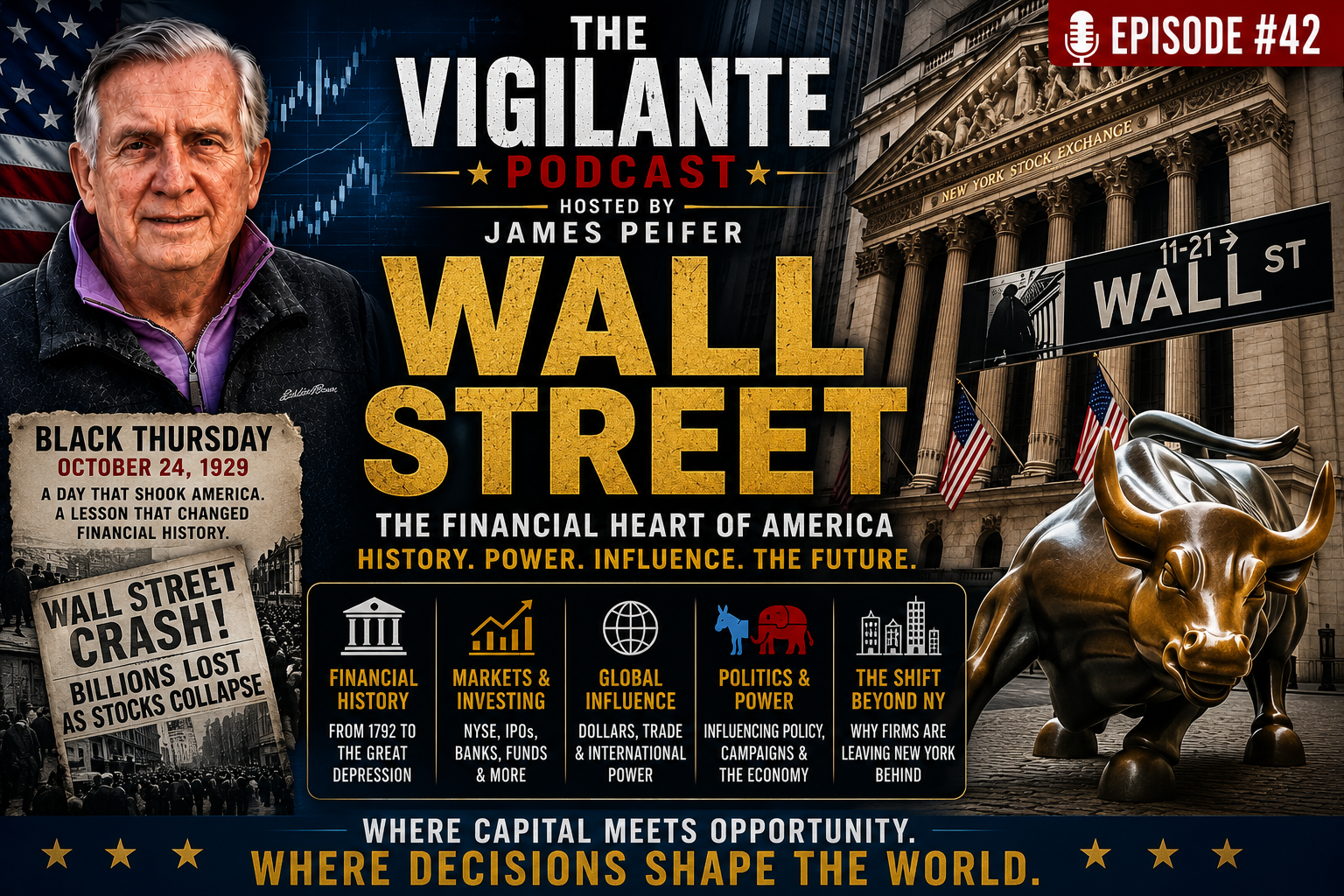
On October 24, 1929 – “Black Thursday” – panic swept through Wall Street. Investors crowded trading floors and brokerage offices as millions of shares were dumped onto the market. The selling intensified on “Black Monday and Black Tuesday” (October 28-29), when stock prices collapsed at unprecedented speed. Fortunes accumulated over decades vanished in hours. Banks, businesses, and ordinary families who had invested their savings watched their financial security evaporate. The crash shattered confidence in the American economy and triggered a worldwide financial crisis.
For millions of Americans, the collapse was not merely an economic event – it was a personal catastrophe. Businesses that had once symbolized American prosperity locked their doors, unable to survive the collapse in consumer spending. One by one, banks failed, taking with them the life savings of depositors who had trusted them. Men and women stood outside shuttered bank buildings, clutching passbooks that had become worthless overnight.
The unemployment lines grew longer with each passing month. Fathers who had proudly provided for their families, wandered city streets in search of work that no longer existed. Skilled craftsmen, engineers, teachers, and laborers alike found themselves competing for the simplest jobs. Many walked miles every day hoping to find employment, only to return home empty-handed.
Entire families lost their homes. Mortgages went unpaid, farms were foreclosed, and families crowded into makeshift shelters constructed from scrap lumber, cardboard, and discarded metal. These shantytowns were nicknamed “Hoovervilles,” and became visible symbols of despair across America.
In the weeks and months following the stock market crash, newspapers carried reports of investors, business owners, and professionals who took their own lives after suffering devastating financial losses.
Because the United States had become one of the largest lenders and industrial economies, the financial collapse spread rapidly through international markets. American banks curtailed foreign lending, international trade contracted sharply, and global demand for manufactured goods and agricultural products plummeted. Nations heavily dependent on exports to the United States saw factories close and unemployment soar.
___
According to Michael Novogratz, founder of Capital Fortress, the causes of the crash were due to a specific combination of leverage, monetary regime, and banking-system fragility. It took twenty-five years for the DOW to recover. It was not until November 23, 1954, that the DOW recovered above its September 1929 peak.
Several measures were implemented to prevent the recurrence of the market crash, including regulatory reforms and the establishment of safety nets for investors. Key actions included the creation of the Securities and Exchange Commission (SEC) and the introduction of trading halts during market declines to stabilize trading conditions.
___
Wall Street is the financial heart of the United States. Wall Street is both a physical street in Lower Manhattan in New York City and a symbolic name for the American financial industry. When people say, “Wall Street,” they are usually referring not just to the street itself but to the banks, investment firms, stock exchanges, and financial markets that play a central role in the United States and global economy.
The Street Itself
Wall Street is a short street in Manhattan that dates to 1653, when Dutch settlers built a defensive wall along the northern boundary of New Amsterdam. Although the wall disappeared long ago, the name remains.
Today, the area is home to many historic institutions, including the New York Stock Exchange, the world’s largest stock exchange by market capitalization.
Events in Wall Street History
Landmark Moments in Wall Street
- 1792: The Buttonwood Agreement considered the beginning of organized securities trading in the United States.
- 1929: The stock market crash, “Black Thursday” that contributed to the Great Depression.
- 1987: “Black Monday,” one of the largest one-day market declines in history.
- 2008: The global financial crisis, which led to the failure or rescue of several major financial institutions and a severe recession.
The Importance of Wall Street
Wall Street serves as the center of American finance. Institutions based there – or historically associated with it help:
- Buy and sell stocks and bonds.
- Raise money for businesses through stock offerings and bond sales.
- Manage investments for individuals, corporations, and governments.
- Provide banking and financial services.
- Determine the availability and cost of credit throughout the economy.
When a company qualifies for an Initial Public Offering (IPO), its shares are often listed on a major exchange such as the New York Stock Exchange or Nasdaq. An IPO is the process through which a private company sells its shares to the public for the first time, allowing it to raise capital and become publicly traded. The transition enables the company to access a broader range of investors and funding opportunities.
___
Wall Street includes many different professions:
- Investment bankers
- Stockbrokers
- Portfolio managers
- Financial analysts
- Traders
- Economists
- Hedge fund managers
- Wealth managers
Many of these professional’s work for large investment banks, brokerage firms, mutual funds, pension funds, insurance companies, and private equity firms.
___
Influence on the Economy
Wall Street has tremendous influence on the economy:
- It directs investment capital toward businesses.
- It determines stock prices.
- Influences interest rates and borrowing costs.
- It reflects investor confidence in the economy.
- Responds quickly to political events, economic reports, wars, and technological advances.
If investors believe the economy will grow, stock prices often rise. If they expect a recession, markets may decline.
___
Wall Street and Main Street
People often contrast Wall Street with Main Street:
- Wall Street represents investors, banks, corporations, and financial markets.
- Main Street represents ordinary Americans, small businesses, workers, and local communities.
The distinction is symbolic, since economic conditions affecting one often influence the other.
___
Influence within the Republican and Democratic Party
Institutional investors, hedge funds, private equity firms, labor unions, corporations, wealthy individuals, and industry associations all seek to influence public policy. Campaign contributions are one of the several methods they use, along with lobbying, political action committees (PACs), (Super PACs), public advocacy campaigns, and direct engagement with elected officials.
Their influence differs depending on the political party, the industry, and the political issues involved.
Republican Party candidates traditionally receive substantial support from:
- Hedge fund managers
- Private equity executives
- Energy companies
- Manufacturing interests
- Commercial real estate developers
- Agricultural organizations
- Business associations
- Wealthy entrepreneurs
Democratic Party candidates traditionally receive significant support from:
- Labor unions
- Trial lawyers
- Entertainment industry executives and members
- Environmental organizations
- Health-care organizations
- Wealthy individual donors both foreign and domestic
Historically
Historically, if considering the entire period from late 19th century through today, the Republican Party has generally had the longer and stronger historical association with Wall Street and the financial industry because of its longstanding pro-business platforms. However, over the past three decades, the Democratic Party has also received substantial financial support from Wall Street, particularly from executives at major investment banks, asset managers, and hedge funds during certain election cycles. Wall Street is best understood today as a diverse collection of firms and individuals that often support both parties to advance their economic interests while adapting to changing political and regulatory environments.
___
Wall Street exerts global influence
The United States has the world’s largest capital markets, and the U.S. dollar serves as the dominant international reserve currency. That influence extends to allies, neutral countries, and nations that have adversarial relationships with the United States.
Wall Street institutions help determine where trillions of dollars in investment capital are directed:
- Government issue sovereign bonds that are purchased by institutional investors.
- Corporations from around the world list shares on American exchanges or seek financing from U.S. investment banks.
- Most international trade in oil, natural gas, commodities, shipping, aviation and international banking is conducted in U.S. dollars.
Wall Street plays a central role in these dollar-denominated financial markets.
___
Wall Street influence on countries considered United States adversaries
China
The United States government has imposed restrictions on investment in certain Chinese companies linked to military or nations security concerns. Some Chinese firms have been delisted from U.S. exchanges for failing to meet regulatory requirements. Export controls and investment restrictions have expanded in areas such as advanced semiconductors and certain technologies.
Russia
Before Russia’ 2022 invasion of Ukraine some Wall Street firms had invested in Russian companies. Investors held Russian stocks and bonds. Since the invasion, extensive U.S. and allied sanctions were imposed. Many Russian securities became effectively un-investable for U.S. investors. Many major financial institutions exited much of their Russian business.
North Korea
North Korea is almost completely isolated from the U.S. financial system due to comprehensive sanctions. Wall Street has essentially no direct investment relationship with North Korea.
Summary
Wall Street’s influence stems from its role in global capital allocation, the prominence of the U.S. dollar, and the depth and liquidity of American financial markets.
___
Frequent Criticisms of Wall Street
Wall Street is often criticized for:
- Excessive risk-taking.
- Large executive compensation.
- Short-term focus on profits.
- Market speculation.
- Contributing to financial crisis.
Others argue that Wall Street performs an essential role by efficiently allocating capital, helping businesses grow, supporting retirement savings, and fostering innovation. It is where investors and institutions connect businesses seeking capital with people and organizations looking to invest, making it the most influential financial center in the world.
___
New York has become unfriendly to businesses
The movement of some financial firms and corporations out of New York is a real trend. Critics of New York’s business policies state that the state’s political climate has become increasingly unfriendly to businesses. Wall Street has been the financial heart of the United States for more than two centuries, but in recent years several major financial institution, hedge funds, private equity firms, and corporations have expanded or relocated significant operations to states such as Texas, Florida, Tennessee, North Carolina, and others. These states promote themselves by offering lower taxes, lighter regulation, and lower operating costs.
Now for the first time, Bloomberg News has reported – hundreds of Wall Street firms, over $1 trillion in managed financial assets, and thousands of high-paying jobs have moved to Florida and Texas from New York.
The corporate and asset migration from New York reflects what many describe as an increasingly anti-business political environment. They argue that higher taxes, expanding regulations, the very high and out-of-control crime rate, and policies viewed as less supportive of employers discourage investment and encourage companies to establish headquarters or major offices in states that actively compete for businesses.
I personally favor the decentralization of Wall Street to other cities and states. Advanced technology makes it easy to accomplish, and it will provide a healthier political and business climate for the benefit of the American people.
James Peifer